


AGENTIC COMMERCE AND NEW PURCHASE JOURNEYS
The customer journey has already changed with the growing use of ChatGPT and other AI assistants in search behaviors. With Agentic Commerce, the next shift will be even more profound, as we will begin to delegate to agents not only the search for information, but also parts of the evaluation, decision-making and action process.
In recent years, part of the purchasing journey has already shifted. More and more people are using AI assistants to gather information, compare alternatives, explore products in greater depth or orient themselves before making a decision.
This has already changed the way brands are discovered and considered, because part of the research that previously took place directly through search engines, websites or marketplaces can now happen within an interaction with an LLM.
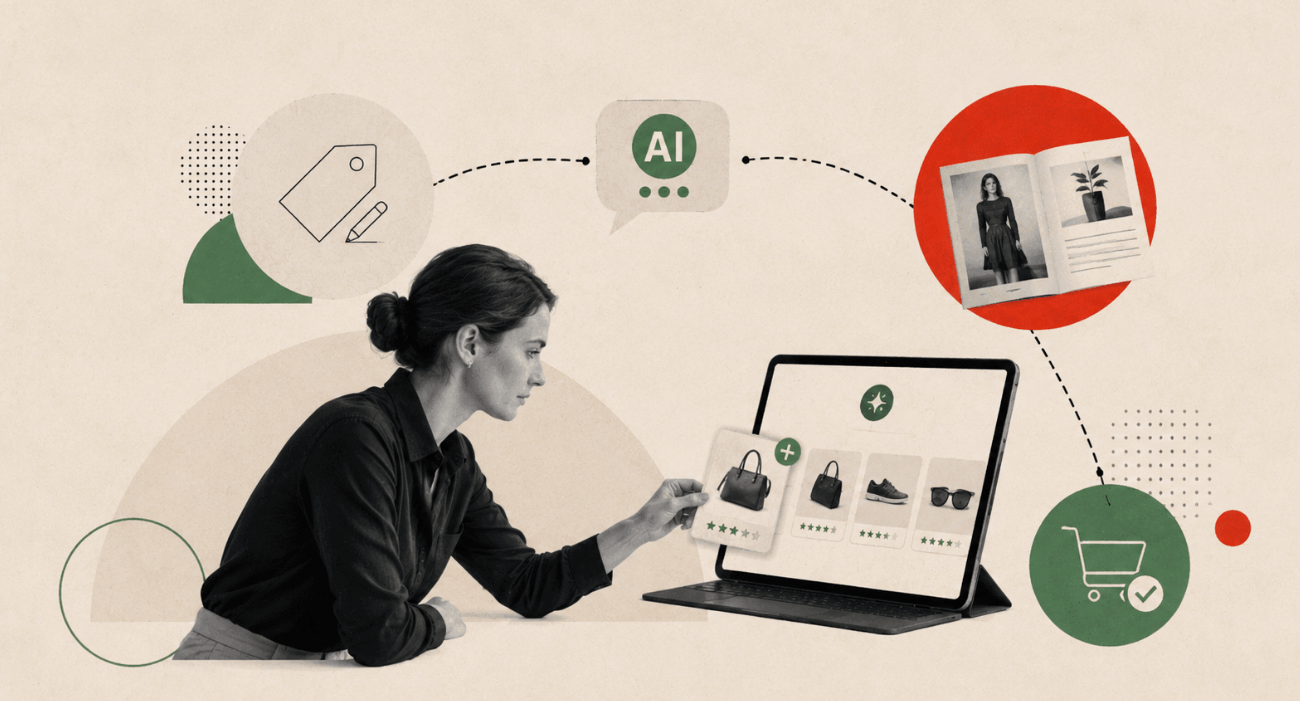
With Agentic Commerce, this evolution goes one step further. When interacting with LLMs, we primarily ask for an answer or recommendation; with an agent, we can instead assign a task, asking it to find a solution, evaluate multiple alternatives and carry out an increasing part of the journey on our behalf.
For marketers, this means starting to consider a new variable within the customer journey: how much we are willing to delegate.
FROM SEARCH TO DELEGATION
The level of delegation will not be the same for everyone. Some people will continue to want to control every step, directly checking information, alternatives and conditions. Others will be more willing to entrust the agent with part of the research, comparison or selection process.
Two users with the same need may therefore follow very different paths depending on the level of autonomy they decide to give the system.
The type of product will also influence whether people choose to rely on Agentic Commerce or follow a traditional purchasing journey: think, for example, of recurring purchases of fast-moving consumer goods compared with higher-ticket products.
This also makes the customer journey more complex to interpret. If today a user can already arrive on a website after gathering information through ChatGPT, with agents an even greater share of the research and evaluation process may take place before any direct interaction with the brand.
Queries, visits, comparisons and return visits to the website, which today provide useful signals for understanding intent and behavior, may therefore become less visible or take different forms.
WHEN THE AGENT ENTERS THE DECISION-MAKING PROCESS
This shift also affects the way a brand needs to prepare to be found and evaluated.
If an agent needs to compare products or services on behalf of a user, it must be able to correctly understand the information that describes them. Catalogs, feeds, attributes, product pages and structured data therefore become increasingly important in determining how easily an offering can be interpreted and included among the alternatives being considered.
This becomes particularly relevant because the quality of information no longer affects only the user experience, but also the ability of AI systems to read and use what the brand makes available.
This raises a very practical question for companies: how ready is our digital ecosystem for a customer journey in which an increasing share of interactions will be mediated by agents?
HOW INTARGET CAN HELP
Intarget’s approach starts precisely by measuring this level of readiness. Through an Agentic Readiness Assessment, we analyze catalogs and feeds, data completeness and structure, how easily information can be interpreted by agents, and the brand’s positioning compared with competitors. This allows us to identify the gaps that may limit the brand’s presence within new selection journeys and define the priorities for action.
This phase can be followed by the optimization of the digital ecosystem, working on product pages, attributes, structured data, data enrichment and machine-readable content, before measuring the level of readiness again.
The goal is to help brands prepare for a customer journey that is evolving on two levels at the same time: today, AI is changing the way people search for and access information; tomorrow, it will increasingly change what they choose to delegate.
Understanding this evolution and building a digital ecosystem capable of working effectively for agents as well as people will become an increasingly important part of a brand’s ability to be found, considered and chosen.