

THE DUAL PATH OF BRANDING: THE EVOLUTION OF THE RELATIONSHIP BETWEEN ITALY AND CHINA
The global commerce landscape is undergoing an unprecedented transformation, marked by an increasingly dense and complex dialogue between Italy and China. On the occasion of the event promoted together with ICCF (Italy China Council Foundation), titled “The Dual Path of Brand Italy – China”, Intarget outlined a strategic vision that goes beyond traditional export and import paradigms.
The analysis highlights an unavoidable reality: “Made in Italy” is no longer an automatic passport to success in the East, while Chinese brands are gaining ground in the European market not only through mass technology, but through lifestyle, design, and culture.
“We are witnessing the transition from ‘Made in China’ to ‘Designed in China’, where cultural identity prevails over price competition — noted Francesco Boggio Ferraris, ICCF Academy Director & CMO —. Through Cultural bridge branding, ambassadors act as connectors, making Chinese brands globally desirable. With Founder branding, the brand is humanized by strategically integrating the founder into the narrative. Finally, the focus is on emotional value (qinxu jiazhi) to generate a sense of belonging: young consumers today purchase primarily for well-being and identity gratification conveyed by the brand.”
The silent shift: Chinese Lifestyle in Europe
For decades, we have associated Chinese products almost exclusively with the technology and automotive sectors. However, today’s reality shows a significant shift: Chinese brands are entering spaces historically dominated by Italian excellence, such as beauty, fashion, and high-end design.
There are emblematic cases that illustrate this transformation:
Florasis. In the beauty sector, this brand has surpassed one billion dollars in global revenue, bringing traditional Chinese aesthetics and craftsmanship to international markets with a premium positioning.
ICICLE. In fashion, this brand represents a strategic paradox: although Chinese, it uses 50% Italian materials in its collections. Its expansion—culminating in the acquisition of the French maison Carven and its presence at Paris Fashion Week—demonstrates that competition today is based on supply chain quality and sustainability, not low cost.
Pop Mart. A leader in lifestyle and the so-called “fan economy”, it has recorded exponential growth in Europe, opening flagship stores in iconic locations such as La Samaritaine and the Louvre in Paris, leveraging collectible products that blend art and play.
These brands do not just sell products; they sell a deep cultural identity that integrates Eastern production efficiency with a global aesthetic sensitivity.
The new Chinese consumer: from Brand-Orientation to Real Value
The Chinese market has changed radically over the past five years. Italian companies that aim to remain relevant must engage with a highly evolved consumer, whose behavior can be summarized in three structural shifts:
- From aspiration to proof of value: Brand prestige is no longer sufficient. Modern consumers ask whether a product solves a specific problem or truly reflects their current identity.
- The “Outcome-Oriented” approach: The focus has shifted from owning a luxury logo to achieving real utility and experiential outcomes.
- Heritage as applied expertise: While Italian history and tradition are still admired, they are no longer enough to justify a purchase. Consumers seek quality that is functional to their daily life context, not just a nostalgic narrative of the past.
“Understanding China today requires a dual lens: analyzing how consumers behave and how companies compete — explained Roberto Donà, Professor at Xi’an Jiaotong-Liverpool University —. The Chinese consumer is ‘digital-first’, constantly experimenting and more outcome-oriented than brand-loyal. They seek well-being and immersive experiences, not mere ownership. At the same time, companies scale rapidly thanks to short decision cycles and continuous iterations. For global players, reputation is no longer enough: success depends on speed and the ability to adapt to this unique behavioral laboratory.”
The Era of Guochao 3.0
A key concept to understand today’s China is the evolution of guochao, meaning pride in domestic culture. While the early phases of this phenomenon were linked to nationalism or simple aesthetic collaborations, version 3.0 is about deep cultural identity.
Chinese Gen Z seeks authenticity and consistency. In this scenario, success belongs not to those who speak about their own (Western) culture, but to those who can engage with Chinese culture—such as Prada RongZhai in Shanghai: not a store, but a restored historic villa. These initiatives transform historical spaces into cultural hubs, where international luxury interacts with local history, creating an emotional connection that goes beyond commercial transactions.
Industry strategies: what really works
To turn omnichannel into a growth opportunity, it is necessary to adopt industry-specific approaches, abandoning “one-size-fits-all” strategies.
Luxury: ritual and quiet refinement
Luxury must move away from ostentation and embrace the concept of jingzhi, meaning refined and understated elegance. Winning strategies rely on building recurring cultural rituals—linked to local festivities such as Chinese New Year or the Qixi Festival—rather than one-off promotional events. Customer relationships must be data-driven, creating personalized interactions on platforms such as WeChat and RED.
“Luxury in China is shifting toward jingzhi: a cultivated elegance built on rituals and data — commented Stefano Generali, Managing Director Intarget China —. In fashion and beauty, excellence comes through contextualized design and scientific transparency, providing tangible proof of quality. Furniture must go beyond the product to narrate the ‘Italian way of living’, aligning showrooms with local domestic philosophy. Finally, tourism must position itself as a lifestyle brand, offering authentic immersion in craftsmanship and architecture: no longer selling individual products, but an aspiration—integrating the excellence of Made in Italy into everyday life and Chinese digital platforms.”
Fashion & Beauty: life scenarios and scientific transparency
In fashion, adapting European sizing is no longer sufficient; products must be designed for specific Chinese life contexts (office, leisure, travel). In beauty, consumers have become experts: they analyze ingredients and compare formulations on social media. Therefore, storytelling must focus on technical superiority and supply chain safety, providing scientific proof of quality.
Design & Furniture: the showroom as a cultural experience
High-end furniture brands no longer sell simple products, but the concept of “Italian living”. The showroom must evolve into a cultural environment—a space for workshops and material discovery, offering experiences that cannot be replicated online. Design must engage with the philosophy of domestic harmony typical of Chinese tradition.
Tourism: the destination as a lifestyle brand
Italian destinations should not promote only hotels and flights, but an aspirational lifestyle. Today’s Chinese tourist seeks authentic immersion in craftsmanship, gastronomy, and architecture, planning every detail in advance on digital platforms.
Technology and AI: the ecosystem of the future
Both in Italy and China, managing this complexity requires advanced technological infrastructure. The proposed vision involves integrating platforms and Artificial Intelligence agents to monitor, understand, and activate brand narratives in real time.
This ecosystem is structured into three key phases:
- Monitoring: Continuous analysis of digital environments, competitors, and emerging narratives.
- Understanding: Leveraging collective intelligence to validate message resonance across target audiences.
- Activation: AI-powered workflows to manage media and social communication, ensuring consistency and brand safety across markets.
The ultimate goal is to create a continuous loop connecting demand generation with CRM intelligence, ensuring that every interaction generates measurable value.
International orchestration and governance
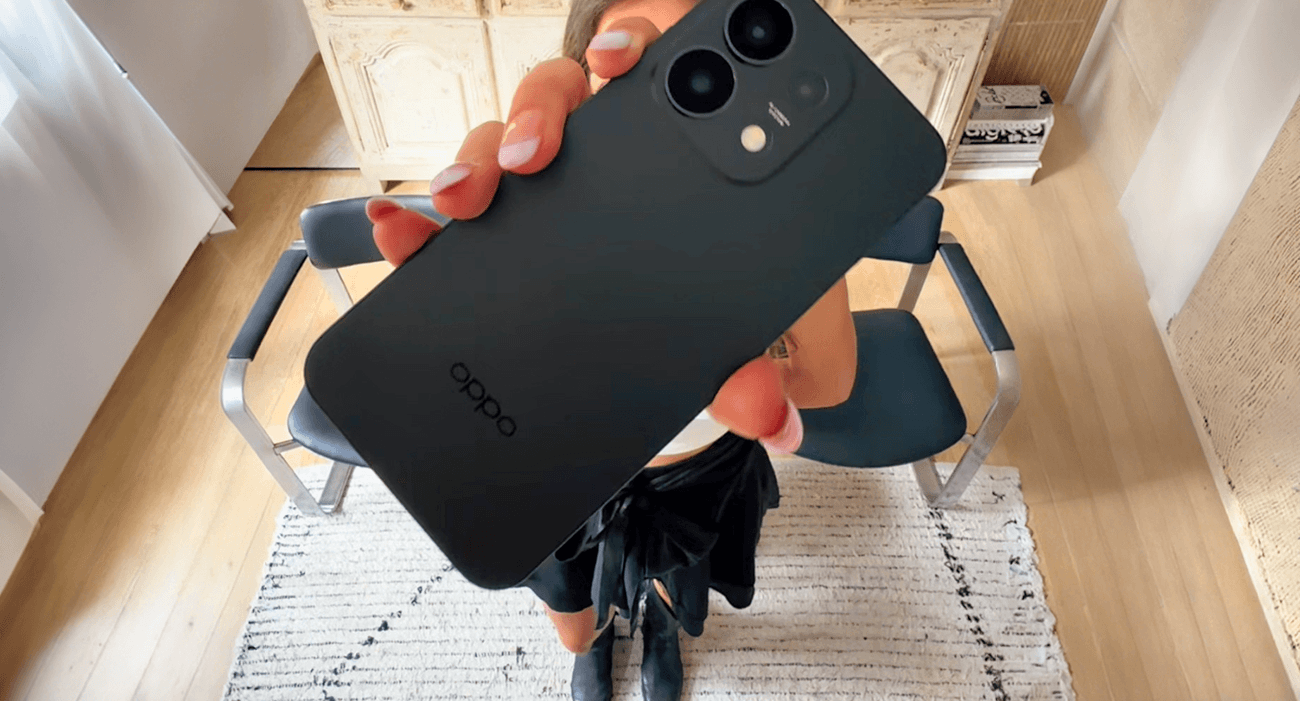
For brands operating across multiple markets, the challenge is to maintain global consistency while ensuring strong local relevance. Intarget presented the Oppo case, where the model is based on a central coordination hub that defines the strategic vision, while local teams retain the freedom to implement initiatives based on their deep market knowledge.
Across different markets, marketing levers vary: for example, in Austria the focus may be on tech reviewers, while in Greece or Italy communication may lean more toward aesthetics, photography, or culinary culture—requiring highly curated partner and influencer selection based on engagement data.
“We have entered a new era — concluded Giulio Finzi, Retail Leader Intarget —. The time of Chinese products as the cheaper option is over. Intarget is working to turn Chinese brands’ entry into Europe into a strategic success, decoding consumer expectations to position companies as quality leaders. We build bridges of trust through transcultural intelligence and integrate brand identity into the local fabric, orchestrating digital communication and supporting solid, authentic growth across the entire continental market.”
Conclusions: Three pillars for the future
The message for the future of Italy–China relations is clear: the response to market challenges must be practical and operational.
- Expertise as a promise: “Made in Italy” must be proven every day through technical quality and cultural relevance—not just stated on a label.
- The challenge of meaning: Competition with Chinese brands is no longer about price, but about the ability to build meaning and value around the product.
- Data-driven approach: Success depends on continuous measurement of business impact, moving beyond vanity metrics to focus on building lasting relationships with consumers.
In this new scenario, companies must act with agility, integrating cultural rituals, native social commerce, and unique physical experiences to remain competitive in an increasingly interconnected world.